
June 18, 2026
To: City of Vancouver Mayor Sim and Councillors,
Re: Housing Reset: Why Vancouver Must Re-think the Villages Plan
2026-06-02 Referral Report: https://council.vancouver.ca/20260602/documents/rr1.pdf
We are Metro Vancouver urbanists, planners, architects, and UBC/SFU academics with decades of experience—some with development backgrounds—who have come together through HousingReset.ca to seek enduring housing solutions.
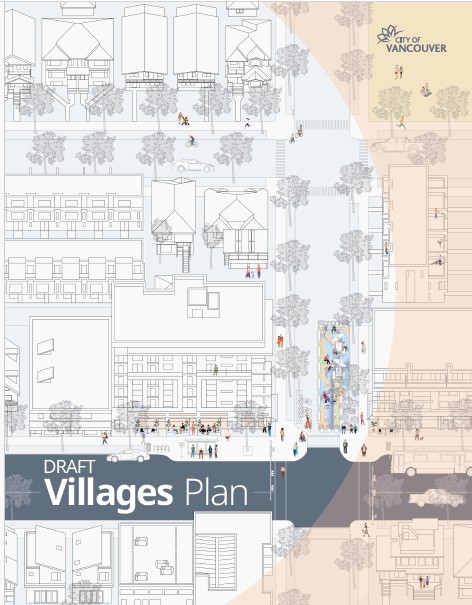
We write with deep concern about the City of Vancouver “Villages Planning Program” scheduled to go to public hearing on July 14. The “everything all at once,” one-size-fits-all rezoning of 17 proposed villages, 550–600 blocks and 13,000 properties risks confusion, unintended damage, and lost opportunity across the city.
We recommend that City Council not proceed with the public hearing as planned in July, or vote “not supported” if it cannot be cancelled.
We are concerned that most residents are unaware about the magnitude of these proposed zoning bylaws, that would substantially impact neighbourhoods and harm existing neighbourhood commercial areas. However, that is precisely what this proposal will do.
1. Existing neighbourhood centres are the best place for local shopping areas, not new commercial in villages that would compete with them.
Vancouver’s long-established shopping districts in neighbourhood centres across the city — such as Sunset, Kerrisdale, Dunbar, Broadway, Commercial Drive, Kingsway, Marpole and others—have anchored communities since the streetcar era. The City has wisely located libraries, childcare, community centres and plazas there, supported by strong TransLink service. These places already deliver convenience and conviviality.
Neighbourhood centres are the much more important, established, community-serving centres with a broad range of shops and services.
However, the Official Development Plan (ODP) identifies new shopping areas in smaller randomly placed villages that will directly compete with the neighbourhood centres shopping areas, many of which are currently struggling to survive with many vacancies.
Staff project a 140% increase in the 17 new village locations local retail floorspace—nearly one million square feet. Many established neighbourhood centres/commercial corridors, all within walking distance from these villages, already suffer 10–15%+ storefront vacancy rates and will thus be impacted very negatively by this plan to add substantially more commercial shopping areas as competition.
Instead, efforts need to be directed toward enhancing the established neighbourhood centres and Business Improvement Areas (BIAs) where businesses are supported by additional density within walking distance. Work within the existing neighbourhood framework with a series of community economic development metrics, to provide planning that builds roots in the community, not just zoning schedules.
2. Blanket rezoning spread too thinly will produce blight.
History shows that when redevelopment is left to market timing across vast areas, the scattershot development makes for a patchwork of neglected, vacant, or unwanted properties between large out of scale developments that ruins neighbourhoods. Existing residents and businesses pay the price. Destabilization of neighbourhoods will occur as the real estate industry chases sites and sets off land value increases in some areas and land value deflation from oversized neighbouring development in others. The result is widespread inequity with many individual victims, and gains in the hands of a few.
Spreading development thinly will likely result in “orphaned” buildings between out of scale new developments.
3. The proposed densities in villages vastly exceed compatible scales in the local context.
The proposed building form for residential in villages of six storeys, at a very high 3.7 FSR, is far out of scale for these local areas, and is an inappropriate fit as proposed. Further, about 750 owners have been advised by the City their properties are effectively frozen until they are redeveloped at mixed used 6 storeys with commercial at grade.
The proposed village areas cover existing neighbourhoods that are already zoned for increased density such as multifamily conversions with infill of RT5 within the Grandview Woodlands Community Plan, and Multiplex R1-1 in most other areas.
4. The proposed additional density in villages is not needed to meet future growth to 2050.
The Vancouver Regional Context Statement, and the ODP, show that there is already enough approved development in the pipeline to meet future growth to 2050. The villages are not needed to meet this growth, nor will it be affordable. It will only create damage and dysfunction to the existing city fabric.
The current rushed timeline is completely unjustified. Thousands of city residents and business owners will come back from summer holidays and find that their properties have been rezoned, most having no idea beforehand of the proposal. Such surprises are highly unpopular, stressful and un-necessary.
Note that City Council has recently had to reconsider how the Multiplex R1-1 zoning was implemented due to community impacts, lack of reasonable guidelines, and rushed implementation. This villages proposal would have much greater consequences.
5. Solutions that enhance neighbourhoods rather than undermining them are easily achievable.
Council and staff need to establish a collaborative way forward by working with residents and businesses on neighbourhood-scale plans/actions that recognize the distinct character and diversity of our neighbourhoods, add housing choices, especially affordable housing, near existing neighbourhood centres, strengthen their economic viability and attractiveness, and deliver walkable, climate-friendly communities without the collateral damage that we predict.
In Conclusion
We recommend that City Council not proceed with the public hearing as planned in July, or vote “not supported” if it cannot be cancelled. Instead engage with each neighbourhood in collaborative community planning as proposed above.
Signed:
(In alphabetical order)
Larry Beasley, CM, FCIP, Former Co-chief Planner of Vancouver, author Vancouverism.
Patrick Condon, Professor Emeritus UBC School of Landscape and Architecture, author Broken City. Former head city planner
Frank Ducote, Principal, Frank Ducote Urban Design, former Senior Urban Designer, City of Vancouver
Michael Geller,FCIP, RPP, MLAI, Ret Architect AIBC, urban planner, real estate consultant, developer and Adjunct Professor, SFU
Barbara Gordon, Retired Architect AIBC and retired Director of Capital Planning, UBC
Penny Gurstein, PhD, MCIP (ret.) Professor Emeritus and Former Director, School of Community and Regional Planning, Co-Director, Housing Research Collaborative, UBC
Scot Hein, Retired Architect MAIBC/Former COV and UBC Senior Urban Designer and Development Planner/Adjunct Professor Urban Design UBC/SFU Faculty Continuing Studies/Founding Board Member Urbanarium/Board Member Small Housing BC/Housing Advocate
Norman Hotson, Retired Architect AIBC, FRAIC, RCA, Hon PIBC
Sandy James, former City of Vancouver City Planner, Managing Director Walk Metro Vancouver
David Ley,OC, FRSC, PhD, Urban Geographer, Professor Emeritus UBC, author Housing Booms in Gateway Cities
Mike Mangan, Barrister & Solicitor (Ret.), who worked with the real estate industry for many years, authored The Condominium Manual and taught at UBC for 25 years
Darlene Marzari, first a Social Planner at City of Vancouver, fought the Freeway to save Chinatown/Gastown/waterfront, City of Vancouver Councillor, BC Minister of Municipal Affairs, and established the Liveable Region Strategic Plan (1990)
Bill McCreery, former registered architect AIBC & AAA, helped create North & South False Creek & thousands of units of developer, public & social housing in BC, Alberta & UK, developed several Vancouver residential projects
Sean McEwen, Retired Architect AIBC, FRAIC. Affordable housing advocate
Graham McGarva, FRAIC, Retired Architect AIBC, M.A.
Elizabeth Murphy, private sector project manager, and senior property development officer, formerly with the City of Vancouver’s housing and properties department, BC Housing and BC Buildings Corp
Brian Palmquist,Award winning architect and author, AIBC MRAIC BEP CP LEED AP
Tom Phipps, Retired Senior Planner City of Vancouver (33 years)
Mary Pynenburg MRAIC (Retired) MCIP (Retired) Former Director of Planning City of New Westminster, Former Director of Planning and Development City of Kelowna, former Director of Design / Development CP Hotels
Robert Renger, BES, MCP; Consultant City Planner; Former Senior Development Planner and City’s lead for UniverCity at SFU, City of Burnaby
Mary Beth Rondeau, Ret Architect AIBC Former Urban Designer City of Vancouver
Ralph Segal,MAIBC (ret.) Former Chief Urban Designer / Development Planner, City of Vancouver
Ray Spaxman, ARIBA (Rtd), MRTPI (Rtd,) FCIP, Hon AIBC, LL.D, Director of Planning, City of Vancouver 1973-1989
Sara Stevens, PhD, Associate Professor UBC School of Architecture and Landscape Architecture, Chair of Urban Design, Co-founder of Architects Against Housing Alienation
Erick Villagomez, Lecturer UBC School of Community and Regional Planning, Principal, Mētis Design | Build, Editor-in-Chief, Spacing Vancouver
Arny Wise, B. Comm., M.Sc., RPP, MCIP (ret), urban planner/ retired developer (President, Synergy Develop., VP Development, Goldfan Holdings), Board of Directors Toronto Economic Development Corporation (1990-1999)
David Wong, Architect, AIBC; formerly with Engineering & Planning Dept. City of Vancouver
Elvin Wyly, Ph.D., Professor of Geography and Urban Studies, UBC


Leave a comment